Showing posts with label Kyoto. Show all posts
Showing posts with label Kyoto. Show all posts
Saturday, September 30, 2017
Getting around Kyoto
One difference to life in Japan is that we don't have a car. Sometimes, we use some public transportation (buses, trains, subways), but mostly we walk. This makes everything take longer, but you also notice lots of beautiful things along the way that you would have missed otherwise - like this little guy.
Butterfly = 蝶 (kanji), ちょう(hiragana) - pronounced "chou"


Takaragaike Park - Kodomo no Rakuen
About 15-20 minutes walk from our apartment, we found a great playground, Kodomo no Rakuen (Children's Paradise). On the weekdays, we can play nearly alone and on the weekends, it's an incredibly popular place with tons of families enjoying themselves and a picnic lunch. Some people even bring along camping tents to provide some shade.
Vanessa especially liked the giant climbing spider's web and the hammock swing. Xavier loved the maze and the "mountain" in the middle of the park. Zoe insists the park had delicious rocks. Toddlers are weird, haha.


Vanessa especially liked the giant climbing spider's web and the hammock swing. Xavier loved the maze and the "mountain" in the middle of the park. Zoe insists the park had delicious rocks. Toddlers are weird, haha.


Friday, September 8, 2017
Art Class for Kids
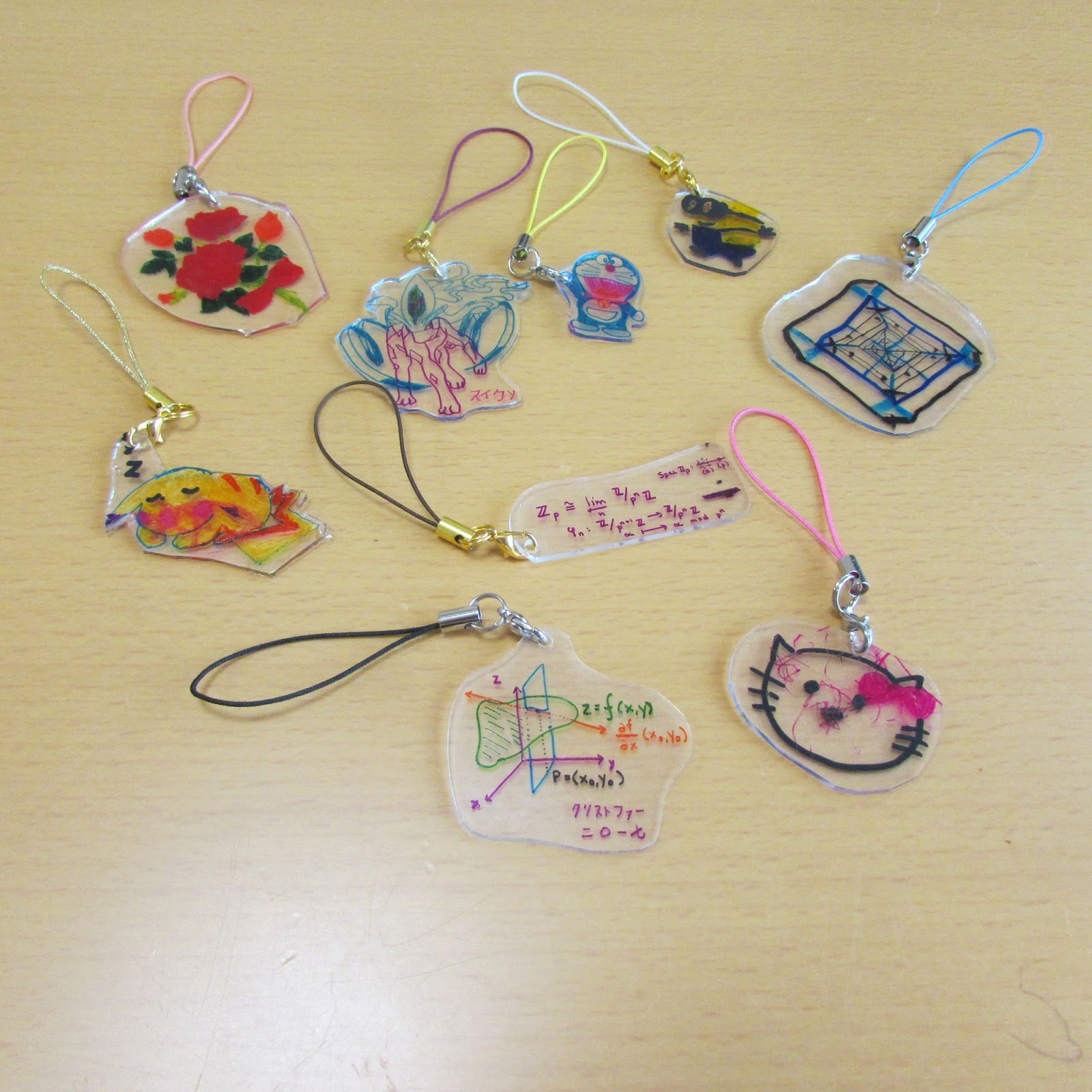
Our first weekend in Japan we made our way back to the Kyoto City International Foundation which housed many of the events and clubs we enjoyed back in 2007. They were having a KoKo Kids meeting to do an art project with shrinky dinks. There were only two families in attendance, so we all got to participate, even the "grown-ups."
Can you guess which project(s) belong to which Rasmussen?


Sunday, September 3, 2017
Guess who's back?
After a five year hiatus, our blog is (temporarily) back. Enjoy!
Last month, I graduated from nursing school with the 2017 cohort of the SCSU ACE Program. It was an incredibly crazy, but wonderful year. I was chosen by my classmates to give a graduation speech at the pinning ceremony.
Next, Chris was the Best Man in Hunter & Corinne's wedding. Here's the toast.
Last week, I passed the NCLEX and we moved to Kyoto, Japan for the semester. Bit of a week, eh?
Our initial flight departed JFK at 1:45am, so that was a bit of an adventure with three kids. But, we made it to our layover in Shanghai more or less in one piece. Then, after a few hours of "patiently waiting", we headed for Osaka. The kids were really excited about the flights since they were the first that Vanessa and Zoe had ever been on. Xavier had only flown once previously when he was a baby, so he was as excited as his sisters. They did great.
Now, we are in our apartment in Kyoto slowly recovering from jetlag. It's great to be back in Japan!


Last month, I graduated from nursing school with the 2017 cohort of the SCSU ACE Program. It was an incredibly crazy, but wonderful year. I was chosen by my classmates to give a graduation speech at the pinning ceremony.
Next, Chris was the Best Man in Hunter & Corinne's wedding. Here's the toast.
Last week, I passed the NCLEX and we moved to Kyoto, Japan for the semester. Bit of a week, eh?
Our initial flight departed JFK at 1:45am, so that was a bit of an adventure with three kids. But, we made it to our layover in Shanghai more or less in one piece. Then, after a few hours of "patiently waiting", we headed for Osaka. The kids were really excited about the flights since they were the first that Vanessa and Zoe had ever been on. Xavier had only flown once previously when he was a baby, so he was as excited as his sisters. They did great.
Now, we are in our apartment in Kyoto slowly recovering from jetlag. It's great to be back in Japan!


Tuesday, August 5, 2008
Shake, Rattle and Roll
With two hours to spare before the Kansai Airport bound MK Shuttle came to pick us up, we squeezed in one last quintessentially Japanese experience -- an earthquake.
Since we were excited/nervous about our trip back to the US, we were both inadvertently awake ahead of the alarm clock which was scheduled to ring at 6:30am. This was good since the earthquake struck at 6:26am. If we weren't awake, we probably would have missed it.
Other than being an earthquake, it was not noteworthy and thankfully only measured a 3.8 on the Richter scale. In fact, at first, Chris was convinced that the rumbling was caused by a truck driving by. Because of the simulations during my field trip to the disaster center I was pretty sure it was an earthquake. We stood in a door frame and in about 10 seconds, the whole thing was over. In the end, all that happened was that one more thing got checked off our "things to experience in Japan" list. Talk about down to the wire... almost missed this one. Whew! :)
The online news article from the Mainichi Daily News was taken down quickly in favor of more recent news, but here is the text, if you'd like to read it.
Since we were excited/nervous about our trip back to the US, we were both inadvertently awake ahead of the alarm clock which was scheduled to ring at 6:30am. This was good since the earthquake struck at 6:26am. If we weren't awake, we probably would have missed it.
Other than being an earthquake, it was not noteworthy and thankfully only measured a 3.8 on the Richter scale. In fact, at first, Chris was convinced that the rumbling was caused by a truck driving by. Because of the simulations during my field trip to the disaster center I was pretty sure it was an earthquake. We stood in a door frame and in about 10 seconds, the whole thing was over. In the end, all that happened was that one more thing got checked off our "things to experience in Japan" list. Talk about down to the wire... almost missed this one. Whew! :)
The online news article from the Mainichi Daily News was taken down quickly in favor of more recent news, but here is the text, if you'd like to read it.
A moderate earthquake jolted Osaka, Kyoto and Hyogo Prefectures early Wednesday morning, the Meteorological Agency said. There was no report of casualties or damage to property. No tsunami warning was issued following the quake.
The temblor that struck at 6:26 a.m. registered 3 on the 7-point Japanese intensity scale in Takatsuki, Osaka Prefecture, and Kameoka, Kyoto Prefecture. It also measured 2 on the Japanese scale in extensive areas of Osaka, Kyoto and Hyogo prefectures. The focus of the earthquake, which is estimated at 3.8 on the open-ended Richter scale, was located about 20 kilometers below the ground in southeastern Hyogo Prefecture.
Monday, July 28, 2008
Firewalking, Kyoto Style

 Tonight was the Hiwatari Matsuri at Tanukidani Fudo temple in the northeast mountains of Kyoto. (For those that care, this event is also sometimes referred to as Sennichi Mairi Hiwatari-sai.) It was a really fun festival - one that we had been looking forward to for months. The basic idea was that everyone walks across ash and hot coals while praying for protection from illness and misfortunes. A chance to walk on hot coals! Who could possibly pass that up?
The festival was officiated by a group of yamabushi, or mountain monks.
 They chanted several sutras and said prayers while lighting a huge bonfire of wooden planks arranged in a square and covered with cypress leaves. They also had one priest wave a haraigushi (wand with zigzag strips of white paper) over the area to purify it. Even though the evening was rainy, the bonfire still sprang to life almost instantly upon being lit. While the fire roared, stacks of gomagi (wooden sticks with prayers written on them) were thrown into the fire. The yamabushi, together with Buddhist pilgrims in white robes, continued to recite prayers over the burning flames. Adding to the other-worldly atmosphere, were the sounds of monks blowing on conch shells and drumming.
 When the fire calmed down somewhat and the wooden planks started to collapse, the monks broke down the bonfire with rakes. Then, the ash, coals and remaining wood pieces were spread and raked to form a path. I'd guess the path was about 10 meters long. Most of the red coals and embers were pushed to the sides of the path. So, it wasn't really that long or that hot.
Finally, it was time to begin the firewalking. The monks and pilgrims walked across first, cutting the ropes at both the beginning and end of the path. Behind the monks, a long line of eager participants followed. We placed ourselves near the back of the line hoping to get an idea of what to expect before we were called on to take part. Before setting out across the embers, each barefoot participant was given a red paper amulet and blessed. Upon successfully walking over the coals, each person was blessed again.
We were surprised to find that the coals did not feel hot on our feet. Most days, the sand at any given beach is hotter! At the outset, I was almost giddy with anticipation and had set up some pretty high expectations. I'm happy to report that the experience did not disappoint. I challenge you to go firewalking, Kyoto style. You'll be purified and protected... and you'll like it.
Sunday, July 13, 2008
Maiko-san! Maiko-san!
 Today was a great day. I discovered that I REALLY like feeling like a princess (or in this case a Maiko-san). It's the kind of fun that makes your eyes sparkle and lets your glee radiate out in all directions.
I went to Studio Shiki, a maiko transformation photography studio. The transformation from Gaijin to Maiko (Kyoto Geisha in training) was fascinating, and the preparations only took about 40 minutes which was a big surprise considering how different the "Before" and "After" were.
The process began by changing into a pair of tabi (two toed white socks) and a thin linen kimono undergarment which tied through the left underarm and around the waist. Once changed, I was hurried off to the makeup room. A very talented makeup artist got started by concealing my hair in a net and covering the netting with a cloth.
 Then, she sprayed her "canvas" with something that I think was stage makeup wax. She began to coat my face, chest and back with a thin layer of Oshiroi, white makeup. Using brushes and sponges, she made sure everything was completely snow white. Then, she drew the trademark sensual design at the nape of my neck. It tickled. I liked it.
After the Oshiroi was done, the makeup artist added blush highlights of pinks and reds around my eyes and on my cheekbones. She continued by applying more pink blush, red eyeliner, liquid black eyeliner, and mascara to my eyes, and red and black eyeliner to my eyebrows.
The last step in the makeup transformation was painting on the deep red lips. The crimson was very wet at first and I had to hold still for the lip color to set. When the color was dry, we discovered that some of my teeth were also coated in crimson. When I asked what to do... she said たべてくだしさい or eat it, please. It didn't actually taste that bad, but I do wonder about the nutritional merits of lipstick.

When the makeup was finished, I was given the near impossible task of choosing a kimono. There were dozens upon dozens upon dozens of beautiful silk kimonos in every color with all sorts of designs and flowers. I wanted the prettiest one, so it took me a while to decide.
Finally, I was ready to get dressed. Two women helped me put on additional kimono undergarments and then the kimono itself. Once the kimono was on, it was easy to see that it was a furisode kimono - the kind with the really long sleeves. Sugoi! After the kimono was in place, my dressers moved on to the obi (kimono sash or belt). For maiko, the obi is tied in a different way, allowing it to dangle. There
 were also at least two separate sections to attach in addition to the outer decorative cords. As far as I can tell, this only makes it feel a lot heavier.
When the obi was tied to perfection, it was time to put on a katsura or maiko style wig. The katsura had several benefits: being the proper color, taking only about five minutes to put on as compared to the two hours it typically would take to create the same style in a salon, and it was already adorned with all the appropriate kanzashi
 (hair ornaments). I think the ones in my wig were primarily red and white plum blossoms (usually worn in February, but very popular) and an Ogi kanzashi or metal, fan shaped ornament with aluminum streamers.
The last step before heading out was putting on the okobo, or the particularly precarious wooden (usually willow) sandals worn by maiko. These sandals are also called pokkuri or koppori because of
 the sound they make when you walk. Because of the way the wood is carved, it felt a little bit like walking on two small rocking horses. Very interesting! I was happy to find that while they were a little tricky to get used to, they weren't as uncomfortable as you might guess.
The breathtaking (!) transformation complete, it was time to begin the "on-location photo shoot" in one of my favorite areas of Kyoto. We wended our way through the small stone streets and alleys of Ninen-zaka, Sannen-zaka and Nene no michi (near Kodaiji Temple and the Ryozan Kannon) with very typically Kyoto backgrounds of traditional Japanese-style houses, walkways and the palpable ambience of the streets all around us. The photographer was really friendly. I had a great time with her.

While the photo shoot was going on, tourists and locals alike were pausing to squeal "Maiko-san! Maiko-san!" and take a few pictures on their cell phones and cameras. It made me feel like a princess and a rock star all at the same time. I could definitely get used to this! :)
After the professional photographer was done, we were able to walk around the Kiyomizudera/Higashiyama area on our own for about half an hour taking our own pictures and luxuriating in the few moments of celebrity and the total confidence which comes with it.
The maiko transformation was unspeakably fun and now I have loads of great pictures which I know I will love for years to come. If, for some reason, you actually want to see more, I promise I won't be shy about sharing. For anyone planning to visit Kyoto, I unequivocally recommend this photo studio and this experience for you or any girls joining you on your travels. Honto ni, tanoshikatta desu ne!


Friday, July 11, 2008
Nagoshi no Harai - Purification Festival
 You may remember that on New Year's Eve in Japan, many temples and shrines have "Joya no Kane", or a tradition where a bell is solemnly rung 108 times. This follows the Buddhist belief that man has 108 sins and that by hearing the bells toll 108 times people can undergo a purification and rid themselves of their sins and troublesome desires at the end of the year.
Now that the year is half over, we have all had time to rack up a new set of bad deeds and sins.
So, of course, there's another purification festival - Nagoshi no Harai. This festival is held sometime in the last weeks of June or first weeks of July each year. Each shrine has a slightly different schedule.
In Nagoshi no Harai, people atone for their sins in the first half of the year, and pray for their health in the reminder of the year by walking through a chinowa, a giant circular wreath made of a kind of rush called chigaya (ちがや) in Japanese.
I went with my friend Sandra to Kitano Tenmangu Shrine, the shrine with the largest chinowa in Kyoto, for this festival. I'm not sure that I completely believe in the ability to be purified and to have the next six months of good health guaranteed by walking through a wreath. But, I like the idea - so I tried it.
 As you can see from the diagram, there is a specific way you must walk through the chinowa. First, you walk through the wreath towards the main building in the shrine complex. Then, you walk to the left and around the outside. Next, you walk through the chinowa again, but this time you walk to the right and around the outside. Then, you pass through the wreath a third and final time, leaving by walking to the left.
Fascinating, desu ne?
Monday, July 7, 2008
Tanabata Matsuri
 I haven't told you about many festivals lately, so I thought I'd let you know about today's fun festival... Tanabata. It is a star festival derived from an old Chinese holiday called Qi Xi.
This festival is one part astronomy, two parts love story.
Part 1:
In the night sky, there are two constellations that only meet once a year, on July 7th. These constellations are Vega (Orihime - a weaver princess) and Altair (Hikoboshi - a cow herder).
Parts 2 & 3:
Orihime and Hikoboshi were both young workaholics. She weaved beautiful cloth all day and he tended to his cattle all the time. One day, these two met and fell instantly in love. Thus, they spent all of their time together and neglected their jobs - no new cloth was woven and the cattle all became sick. This angered her father, so he separated them. Then, they were so sad, they couldn't work anyway. So, Orihime's father decided to allow them to meet once a year. That way, the work could be done and they could see each other again. (Wow, what a deal!)

To help us learn about the celebration, my Japanese class threw a Tanabata party on Friday.
We learned that the way that this festival is celebrated is more fun than the story. Typically, you write wishes on colorful paper strips (tanzaku) and hang those wishes on a Tanabata bamboo tree. Other colorful decorations are also put on the tree. For example, people often hang origami cranes symbolizing long life, nets symbolizing fishing, good harvests and the Milky Way, and long streamers symbolizing the threads that Orihime used to weave.
Later, the tree and all the decorations can be burned or floated down a river so that the wishes all come true. Although, I'm pretty sure that the Tanabata tree that we decorated in my Japanese class will just be dismantled and put away. No fire for us. :(

I made a delicious cheesecake decorated with strawberries and blueberries since the date of our party was also the 4th of July. I figured it would be fun to learn about Tanabata while teaching my classmates and senseis the words to Yankee Doodle and America the Beautiful. They were both received well, but I'm pretty sure the cheesecake was a bigger hit. Then, the senseis taught us all a traditional Tanabata song.
ささのは サラサラ のきばにゆれる (Bamboo leaves are rustling under the eaves)
おほしさま キラキラ きんぎんすなご (Stars are twinkling like gold and silver sand in the sky.)
ごしきのたんざくわたしがかいた (Some pieces of fancy paper on which we wrote out wishes.)
おほしさま キラキラ そらからみてる(Stars are twinkling and looking at the scene on the earth.)
You can try to sing along with my senseis. They are doing the 3rd and 4th lines here. Good Luck!
Saturday, April 26, 2008
Miyako Odori
 Besides cherry blossoms, April in Kyoto is also synonymous with the Miyako Odori at the Gion Kaburenjo Theatre. This popular event is a spring dance performance by geiko and maiko. Some of the other geisha districts in town (Pontocho, Kamishichiken, Miyagawacho) have similar spring dance events, but none are as big as Gion's.
This year's Miyako Odori was based on the Tale of Genji (源氏物語 Genji Monogatari) because 2008 marks the 1000th anniversary of this classic novel.

We took our college friend, Hunter, to see this breathtaking performance. To make sure that he overdosed on Japanese culture, we got tickets which included a tea ceremony that was prepared and served by geisha! The tea ceremony wasn't as formal or as intimate as the ones I've had in my class, but having a geisha involved was really cool. We also got to keep the plates that our sweets were served on as a special souvenir.

The show had eight scenes, each with beautiful new scenery and colorful costumes. Along the sides of the stage were musicians singing and playing the shamisen, flute and drums.
An amusing advertisement about this event claimed that "you might feel like you have come out of a dream when the show is over. It will surely become one of your most spectacular memories of Japan!" We ruthlessly mocked this ad. But, in the end, it turned out to be right.
Monday, April 14, 2008
Imperial Hacky Sack
This weekend, Kyoto Imperial Palace's grounds were open to the general public. In celebration, they held a kemari demonstration. They said kemari was a form of football from the Heian period (794-1185) using a large deerskin ball. But, to me, it's a game of hacky sack with imperial robes. Sweet!
Sunday, April 13, 2008
Pretty Trees with a Cherry on Top
 The last two weeks have been filled with a ridiculous amount of hanami. I have seen more cherry blossoms than you can imagine. And, it's not quite over yet. I'll be searching out the late blooming trees in the region this coming week so that I can show them to my friend who is about to visit Kyoto. My photos don't do justice. I can't seem to capture the zen-like relaxation that you feel when surrounded by blossoms in mankai. But, trust me. It's chill.
Here is a brief list of the best places I've seen cherry blossoms this month.
KYOTO
Tetsugaku no michi (Path of Philosophy)
Okazaki Canal
Heian Jingu Garden
Takasegawa Canal
Kamogawa River
Arashiyama (Nakanoshima Park)
Maruyama Koen
Kyoto Imperial Palace Grounds
OTHER NEARBY CITIES
Uji River
Byodoin Temple in Uji
Saidaiji Temple in Nara
Osaka Castle (Nishinomaru Garden, Grounds, Park by the Moat)
Ookawa River in Osaka
Wednesday, April 9, 2008
Takasegawa Canal Sakura Festival
 On Saturday, I volunteered at the Takasegawa Canal Sakura Festival on Kiyamachi Street. The festival was held by the Old Rissei School machi-zukuri (~Neighborhood Planning Committee) and some very friendly people that I met on Facebook.
The idea of the event seemed to be two-fold: informing people about the history and significance of the Takasegawa River/Canal, and (of course) enjoying the cherry blossoms.
The part of the festival that I was helping with was a boat ride in the canal under the sakura blossoms. Before the event began, several of the volunteers assembled a takase boat and jury-rigged the canal to increase its waterlevel in the area of the boat ride.

A kimono-clad band of five girls helped to lure visitors. Then, we offered rides on the boat to passers-by and gave them information and a quiz about the canal. People seemed to have a really good time. Two maiko even stopped by to see what was going on!

While "volunteer patrolling", I was given the special task to look for foreign tourists and to give them the information sheet about the canal so that they could "more thoroughly enjoy their experience" in the area. This was uneventful as a surprisingly low number of English speaking
 people passed by the canal. However, I did meet one fun couple from Issaquah, WA who were filming a series about Japan for a PBS show called Discoveries Asia. They shot a quick interview with me about the canal, the event I was volunteering for and why I was in Japan. It will probably end up on the cutting room floor, but there is a small chance that I could be on their show. How amusing!
Some other things I learned are that the Takase boats (Takasebune) are well-known from the title of a novel by Ogai Mori. These boats were used on the canal and as such, the name of the canal came from the name of the boats. There is also an old popular song called Takasebune that we were playing on a CD all day. Even though it was a beautiful song, by the end of the day I was so tired of hearing it.
It was a fun experience to try volunteering at this festival, especially since all of the event planners and all of the other volunteers were Japanese. A few of them spoke English, but even so, the day was a good chance to test my Japanese skills. I still have a long way to go, but as long as I kept my sentences simple, people seemed to understand what I was saying. Sugoi desu ne!

Subscribe to:
Posts (Atom)
